JD Sports Fashion PLC (Group, JD) reported profit before tax and adjusting items declined 19.7 percent in the first half ended August 1, stung by margin pressures and a 2.8 percent decline in same-store sales. By region, comps declined 4.0 percent in North America, 3.3 percent in Europe and 1.4 percent in the U.K. while gaining 3.0 percent in Asia Pacific.
With 4,766 stores across 35 countries, JD’s banners include JD, Size?, Courir, DTLR, Shoe Palace, Hibbett, Sprinter, Sport Zone, Cosmos and Go Outdoors. JD also operates 104 JD Gyms sites in the UK, and 83 franchised stores in a further 15 countries.
Review of HY27 Performance
Total sales of £5.9 billion ($7.9 bn) in the first half (H1)ended August 1, a decline of 0.8 percent year-over-year (y/y) at constant FX rates and a decline of 0.7 percent at reported rates.
Excluding the results of the Wheelbase business in the prior period up to its disposal date, organic sales were down 0.7 percent at constant FX rates, which includes a 2.1 percent benefit to sales from net new space opened across the group. This was achieved despite a 2.2 percent lower store count y/y as JD continued to optimize the productivity of its stores. Same-store sales were down 2.8 percent
The reported gross margin percent for the Group in H1 2027 was 20bps (basis points) lower y/y at 46.8 percent (H1 2026 restated: 47.0 percent). JD said, “Throughout the half, the Group made controlled price investments, particularly in the online offer, to boost competitivity and stay close to fast-changing consumer dynamics. The underlying impact of these investments on our gross margin percent (approximately -50bps, net) was partially offset by higher marketing contributions y/y.”
Operating profit before adjusting items and after interest on lease liabilities reached £294 million against £369 million a year ago, down 19.5 percent at constant FX rates and 20.5 percent on a reported currency basis, driven by lower gross profit and higher operating costs.
While operating costs (excluding adjusting items and interest on lease liabilities) were up 1.6 percent y/y at constant FX rates, this was largely driven by the impact of net new space. Excluding this, operating costs (excluding adjusting items and interest on lease liabilities) were flat y/y. Profit before tax and adjusting items was £282 million against £351 million a year ago, a decline of 18.7 percent at constant FX rates and 19.7 percent at reported rates.
Executive Commentary
Régis Schultz, CEO Of JD Sports Fashion Plc, said, “Our Group organic sales were -0.7 percent for the half, a resilient performance against a challenging backdrop of consumer cost-of-living pressures, footwear product cycle headwinds and a highly promotional market. We remained focused on ‘controlling the controllables’ – progressing our strategy at pace while maintaining tight cost and capital discipline.
“We achieved several strategic milestones in the period. We continued to broaden our product proposition, with apparel and accessories growing to 36 percent of Group sales, alongside strong momentum in performance-based running and newer footwear styles. New e-commerce platforms went live in the UK and Ireland, and online sales grew to 20 percent of Group sales. JD STATUS surpassed 10m active loyalty customers globally, and we became one of the first retailers in the US to enable purchase and checkout directly within an AI platform. We also initiated a reorganisation of our store portfolio in Eastern Europe and have now completed our restructuring programme in Germany.
“We ended the half with net cash of £168m, an improvement of nearly £300m year-on-year after returning £260m to shareholders through buybacks and dividends over the last 12 months. Our FY27 guidance is unchanged from our Q2 trading statement: profit before tax and adjusting items of £700m to £800m and free cash flow of £460m to £520m, reflecting our focus on working capital efficiency and inventory management.
“While the trading environment remains tough, I am encouraged by the progress we are making and confident in our strategic execution. My thanks go to all our colleagues worldwide for their continued hard work and focus.”
Regional Summary
Organic sales growth excludes acquisitions and disposals, and is calculated at constant FX rates. Comparable sales growth represents like-for-like sales growth adjusted to include relocations and upsizes.
Regional Commentary
North America, JD’s largest region at 38 percent of Group sales (HY26: 39 percent), “delivered a mixed performance through the half. Q1 trading was supported by key consumer moments including the US tax refund season and product launches. Performance softened in Q2, reflecting weaker consumer sentiment amidst the broader cost-of-living backdrop and deferred ‘back-to-school’ demand into August. Our JD fascia delivered a more resilient performance, supported by growing diversity within its product range, with softer trends across our complementary fascias. Footwear reflected ongoing softness in end-of-cycle product lines and a slower environment for high-heat product in Q2, alongside tougher comparatives; this was partially offset by continued momentum in the performance-based running category and newer footwear styles. Organic footwear sales were c.-5 percent y/y. Apparel and accessories delivered a good performance, particularly in women’s ranges and own brands, with organic sales growth of c.+2 percent. Online delivered a resilient performance supported by better ranges, focused marketing and controlled price investments, with organic online sales growth of +10.7 percent. The phased conversion of standalone Finish Line stores to JD continues, with 145 stores now remaining; market-driven promotional intensity at this fascia remains elevated in the near term. Overall, North America delivered organic sales of -1.7 percent and comparable sales of -3.5 percent. Excluding the standalone Finish Line business, North America comparable sales were -2.5 percent.”
Europe, representing 33 percent of Group sales (H1 2026: 32 percent), “delivered a broadly stable performance through the half despite a subdued consumer environment and a promotional market. Q1 saw weather disruption in Southern Europe and volatile trading through April, partially offset by stronger in-store conversion and online sales. Trading in Q2 continued to reflect a challenging consumer backdrop, with resilient performances across our Sporting Goods businesses in Iberia, Greece and Cyprus providing support to the regional trend. Footwear reflected ongoing softness in end-of-cycle product lines, partially offset by event-driven demand and sales of performance-based running and seasonal fashion lines; organic footwear sales were c.-2 percent y/y. Apparel and accessories delivered a good performance, supported by a strong product offer and growth in own brands, with organic sales growth of c.+7 percent. Online delivered a resilient performance supported by ongoing momentum in ship-from-store sales, with organic online sales growth of +2.1 percent. Overall, Europe delivered organic sales of -0.5 percent and comparable sales of -2.6 percent.”
The UK, at 24 percent of Group sales (H1 2026: 25 percent), “saw an improving sales trend through the half, driven by apparel and accessories together with our Outdoor business. Q1 was impacted by wet weather conditions and lower footfall, though store performance was supported by good in-store conversion throughout the half. Footwear performance remained challenged, reflecting softness in end-of-cycle product lines and a promotional market, partially offset by sales of performance-based running and seasonal fashion lines; organic footwear sales were c.-6 percent y/y. Apparel and accessories benefited from strong sales of football replica kit in Q2, with continued momentum in own brands and women’s product ranges; organic apparel and accessories sales were c.+1 percent y/y. The online channel, which represents a higher proportion of total sales relative to other regions, was impacted by market-driven promotions due to short-term footwear cycle dynamics; organic online sales were -0.2 percent. JD Gyms continued its strong momentum despite a more competitive market. Organic sales were -1.6 percent for the half, with comparable sales of +0.3 percent.”
Asia Pacific, representing 5 percent of Group sales (H1 2026: 4 percent), “delivered consistent growth through the half, with broadbased strength across footwear, apparel and accessories, and online. The region maintained positive sales momentum despite tougher comparatives in Q2, supported by the successful roll-out of a new e-commerce platform in South-East Asia in FY26. Overall, Asia Pacific delivered organic sales of +10.7 percent and comparable sales of +3.0 percent.”
Channel Commentary
- Stores sales from JD’s 4,766 worldwide doors were 79 percent (H1 2026: 80 percent) of Group sales in H1 2027. Sales reached £4.6b billion (-2.3 percent at constant FX rates), with organic store sales down 2.2 percent y/y.
- Online sales, which include click-and-collect, ship-from-store and home delivery orders, were 20 percent (H1 2026: 19 percent) of Group sales in H1 2027, at £1.2 billion (+5.1 percent at constant FX rates). Organic online sales were +5.2 percent y/y.
- Other sales, mainly related to JD Gyms memberships in the UK, were 1 percent (H1 2026: 1 percent) of Group sales in H1 2027, at £0.1 billion (+4.6 percent at constant FX rates). Organic other sales were +4.6 percent y/y.
Category Commentary
Footwear’s organic sales declined 3 percent y/y at constant FX rates, making up 60 percent of sales in the half against 62 percent a year ago. JD said, “Throughout the half we continued to see a significant shift in the global footwear product cycle, given the transition between (smaller in value) newer product lines and footwear styles and the (larger) ‘end of cycle’ product lines of some of our brand partners. Notwithstanding this, we saw strong growth across brands less affected by transition, which reflects the benefit of our agile, multi-brand model. In particular, we are encouraged by our momentum in performance-based running and newer footwear styles. Although small today, these present an exciting longer-term opportunity for the Group.”
Apparel’s organic sales were up 4 percent at constant FX rates y/y, increasing to 36 percent of the mix from 35 percent the prior year. JD said, “The evolution of the apparel and accessories product cycle is very different compared with footwear. Our apparel proposition is in excellent shape, and we believe there is significant scope to leverage this for growth, particularly in North America where our apparel and accessories mix is relatively low compared to other regions. The growing depth of our brand partnerships is supplemented by our own brands, which represent c.15 percent of our apparel sales, and enable us to supplement our apparel proposition by bringing new ranges to market quickly.”
Other (includes outdoor living equipment and JD Gyms memberships) saw organic sales expand 2 percent y/y at constant FX rates, increasing to 4 percent of sales in the half from 3 percent last year.
Store Footprint
JD ended H1 2027 with 4,766 stores worldwide in 35 countries, compared with 4,811 stores at the start of the financial year and 4,872 stores at the end of H1 2026. Total selling space remained in line with the start of the financial period, despite 136 stores being opened and 181 stores being closed during the half (openings and closures include store relocations and conversions). In addition to the store numbers in the table below, the group operates 104 JD Gyms sites in the UK (H1 2026: 97), and 83 franchised stores for the JD and Courir brands (H1 2026: 68).
Overall, JD Group is present via its own operations in 35 countries, with a franchise presence in a further 15 countries.

Guidance
JD reiterated its guidance for the year. The company had lowered its full-year outlook on August 20 due to weakness in footwear sales.
JD said, “HY27 has been a tough half, reflecting many of the near-term headwinds we identified at the time of our FY26 full year results. Ongoing geopolitical and macroeconomic volatility continues to drive a more challenging consumer backdrop. We saw this particularly in the second quarter, with elevated consumer cost-of-living pressures persisting, alongside a slower environment for high-heat footwear product against a highly promotional market backdrop. In this environment we delivered a resilient HY performance, reflecting the strength of our operating model and our focus on operational discipline demonstrated in our strong strategic progress, encouraging apparel and online sales performance, and our ongoing cost and capital discipline. We continue to believe that the markets in which we operate are positioned for average annual medium-term growth of 2-3%. In the near term, however, a number of the headwinds seen in HY27 may persist into H2: a weaker spending environment for our core customer demographic, ongoing product cycle evolution in footwear at some of our major brand partners, and a promotional market backdrop.
“As announced at our Q2 trading statement and reiterated today, we anticipate profit before tax and adjusting items of £700m to £800m in FY27. Our free cash flow guidance of £460m to £520m is unchanged, underpinned by our ongoing cost and capital discipline.
“Consistent with our ‘controlling the controllables’ approach, in H2 we are focused on:
- Continuing to invest in our customer proposition – through marketing, ranging, digital, AI deployment, and data and loyalty – to drive sales momentum and sharpen execution.
- Driving further store footprint productivity across all fascias, including the continued conversion of Finish Line stores to JD in the US, our ‘fewer, bigger, better’ strategy in the UK, and the restructuring of our European store portfolio.
- Maintaining our core trading discipline while managing pricing competitively in line with evolving market conditions.
- Sustaining our sharp focus on cost efficiency and productivity, aiming to significantly offset underlying LFL opex increases.
- Continuing to generate significant free cash flow, supported by disciplined capex and strong working capital management.
“Taken together, these actions ensure we remain well placed to outperform through the cycle, leveraging our strengthened operating model, globally diversified footprint and multi-brand agility.”
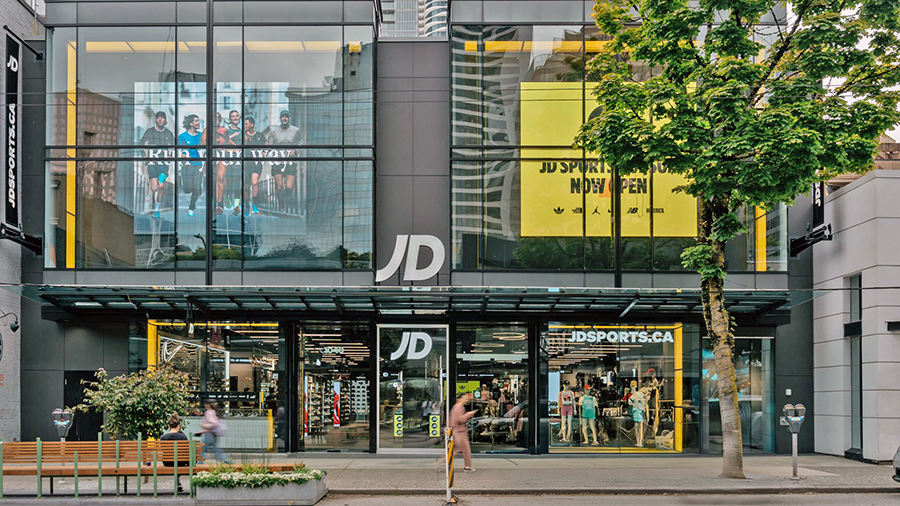
Image courtesy JD Sports Fashion PLC